
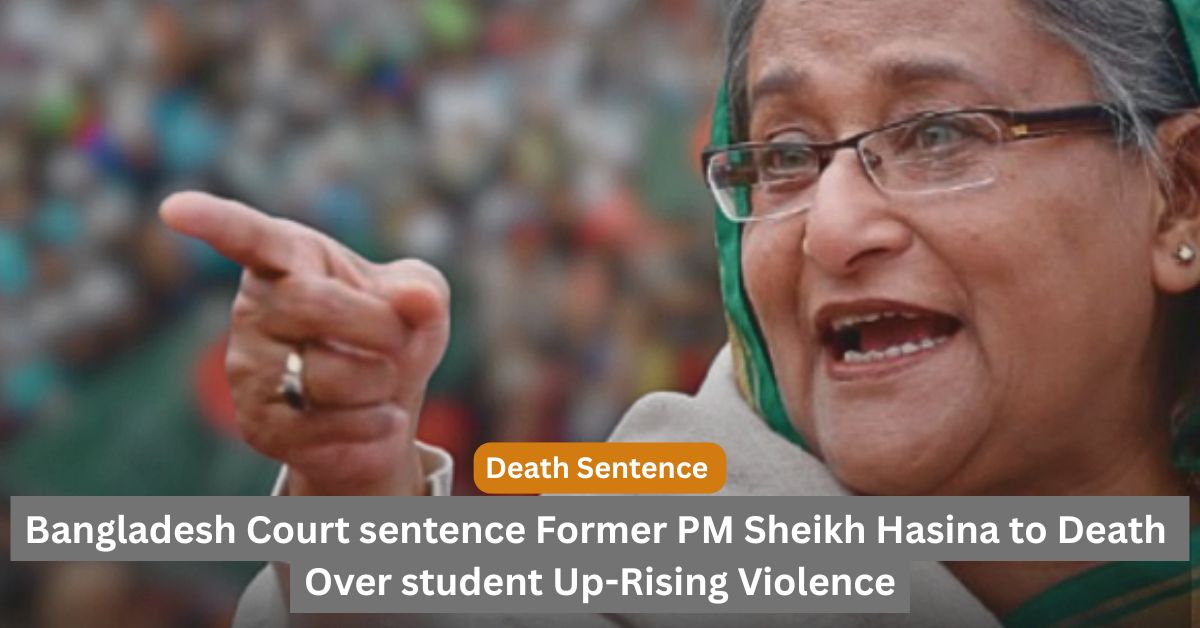
Bangladesh’s ousted leader Sheikh Hasina death sentence for ordering killings during the 2024 student-led uprising. Get the full verdict details and reactions.
The Charges Behind the Sheikh Hasina Death Sentence
The tribunal found the former leader culpable for her role in the violent crackdown on a widespread anti-government movement. Judge Mazumdar stated, “We have decided to inflict her with only one sentence – that is, sentence of death.” The case relied heavily on evidence, including leaked audio verified by the BBC, in which Hasina appeared to authorize the use of “lethal weapons” against protesters in July 2024.
The protests, which began over demands to abolish government job quotas, escalated into a broader push against Hasina’s government. A subsequent UN human rights report documented approximately 1,400 deaths, noting that the shooting of protesters at point-blank range and deliberate maiming could amount to “crimes against humanity”.
Reactions to the Verdict: From Relief to Condemnation
The Sheikh Hasina death sentence has elicited strong and mixed reactions both domestically and internationally. The interim government, which now rules Bangladesh, described the sentence as “historic” and “profound” while calling for public calm.
For families of the victims, the verdict offers a measure of justice. Ramzan Ali, whose brother was shot dead, told the BBC he wanted “exemplary punishment.” Similarly, Lucky Akhter, who lost her husband, stated she wanted the sentence “carried out before the election.”
However, the UN Human Rights Office, while calling it an “important moment for victims,” expressed regret over “the imposition of the death penalty, which we oppose in all circumstances.”
Political Fallout and a Nation Divided
The Sheikh Hasina death sentence casts a long shadow over Bangladesh’s political future. Since her ousting, an interim government led by economist Muhammad Yunus has taken charge, and her political party, the Awami League, was banned in May 2025.
Dhaka-based rights activist Shireen Huq told the BBC that while anger against Hasina persists, the “punishment was not closure for the families.” She emphasized that without an apology from the party, it would be “difficult for the party to be accepted by a majority.” This sentiment underscores the deep political divisions the verdict seeks to, but may fail to, heal.
Legal Appeals and Future Proceedings
Hasina’s state-appointed lawyer, Mohammad Amir Hossain, expressed sadness over the verdict and noted his inability to appeal because his clients are absent. Prior to the sentencing, Hasina’s legal team had already raised fair trial concerns, filing an urgent appeal with the UN. Hasina has repeatedly challenged the interim government to bring its charges before the International Criminal Court in The Hague.
Conclusion: A Historic Verdict with an Uncertain Legacy
The Sheikh Hasina death sentence marks a profound moment in Bangladesh’s history, offering a sense of retribution for the victims of the 2024 crackdown. However, in a nation deeply polarized, the verdict may do little to soothe enduring political divisions. As Bangladesh moves towards a scheduled 2026 election, the fallout from this decision will undoubtedly continue to shape the country’s trajectory for years to come.
Frequently Asked Questions (FAQs)
Q1: What was Sheikh Hasina sentenced for?
A: Sheikh Hasina was sentenced to death on three counts: incitement, ordering killings, and failing to prevent atrocities during the 2024 student-led protests, which resulted in approximately 1,400 deaths.
Q2: What has been the international reaction to the sentence?
A: The UN Human Rights Office called it an “important moment for victims” but stated its opposition to the death penalty in all circumstances.
Q3: What is the current political situation in Bangladesh?
A: An interim government led by economist Muhammad Yunus is currently in charge. The Awami League, Hasina’s party, has been banned, and a parliamentary election is scheduled for February 2026.
Q4: Can Sheikh Hasina appeal the death sentence?
A: Her state-appointed lawyer has expressed difficulty in filing an appeal as his clients are “absent,” though her legal team had previously raised fair trial concerns with the UN.